
Beijing's Ball, a Chess Board and a Three-Year Drought: The Data Schema Behind the China Open
**মূল উত্তর (৬০ শব্দের মধ্যে):** ২০২৬ সালের ৪ অক্টোবর বেইজিংয়ে অনুষ্ঠিত চায়না ওপেন (WTA ১০০০) ইভেন্টে মিররা আন্দ্রেভা দারিয়া কুদারমেতোভাকে ৬-৪, ৬-১ গেমে হারান, আর একাতেরিনা আলেক্সান্দ্রোভা তিন সেটে ডায়ানা স্নাইডারকে হারিয়ে ২০১৯ সালের পর প্রথমবার শেষ ষোলোয় ওঠেন। আলেক্সান্দ্রোভা ইয়োনেক্স ট্যুর প্ল্যাটিনাম বলকে উন্নতির কারণ হিসেবে উল্লেখ করেন, তবে সঠিক কারণ নিশ্চিত করতে পারেননি। **মূল তথ্য:** - মিররা আন্দ্রেভা (বয়স ১৯) এই ইভেন্টে চার নম্বর বীজ এবং reigning রোলাঁ গারো চ্যাম্পিয়ন। - একাতেরিনা আলেক্সান্দ্রোভা ২০২৩, ২০২৪ ও ২০২৫ সালে বেইজিংয়ে টানা তিনবার প্রথম ম্যাচে বিদায় নিয়েছিলেন। - শেষ ষোলোয় আন্দ্রেভার প্রতিপক্ষ দারিয়া স্নিগুর, আলেক্সান্দ্রোভার প্রতিপক্ষ reigning উইম্বলডন চ্যাম্পিয়ন লিন্ডা নোস্কোভা। - আলেক্সান্দ্রোভা স্বীকার করেন, বল বদলের সঠিক কারণ তিনি নিশ্চিতভাবে ধরতে পারেননি। **সূত্র উল্লেখ:** ডাব্লুটিএ (WTA) অফিসিয়াল রিপোর্ট, প্রকাশ: ৪ অক্টোবর ২০২৬ | Cross-checked: cricsultan.com **সম্পর্কিত প্রশ্নোত্তর:** প্রশ্ন: চায়না ওপেন কোন স্তরের টুর্নামেন্ট? উত্তর: এটি WTA ১০০০ ইভেন্ট, যেখানে চ্যাম্পিয়ন ১০০০ র্যাংকিং পয়েন্ট পায়। প্রশ্ন: আলেক্সান্দ্রোভার বেইজিং রানের মূল সীমাবদ্ধতা কী? উত্তর: শেষ ষোলোয় reigning উইম্বলডন চ্যাম্পিয়ন লিন্ডা নোস্কোভার মুখোমুখি হওয়া তাঁর রানের প্রত্যাশিত মূল্য সীমিত করে। প্রশ্ন: মিররা আন্দ্রেভার র্যাংকিং ঝুঁকি কতটা? উত্তর: রোলাঁ গারোর ২০০০ পয়েন্টের ডিফেন্স ক্লিফ ২০২৭ সালের মাঝামাঝি, তাই এখন তিনি পয়েন্ট সংগ্রহ পর্যায়ে আছেন।
2026, 2026, 2026 — three China Opens in Beijing, three first-match exits for Ekaterina Alexandrova. Three observations, one pattern. In early October 2026 the pattern broke: she beat Diana Shnaider in three sets to reach the Beijing round of 16 for the first time since 2026. What she said afterwards is the most valuable data point of the event — that the Yonex Tour Platinum ball now "suits my game more than it used to." The obvious question: did the player change, or did the ball?
I have been logging matches since 2026. A rotator-cuff injury ended my junior career at the Barishal divisional training centre, and that is when I learned something I still work by: pain is unstructured data waiting for a schema. A sensation does not tell you where the problem is; a daily log does. Ball speed, court bounce and a player's decision-making follow the same rule.
That same year I hand-logged all 32 matches of the National Tennis Championship at the Ramna complex — service percentage, unforced errors, break-point conversion. I built my first database because memory alone cannot carry the weight of a season. The log produced a finding: the champion won only 54 percent of baseline rallies but 78 percent of net approaches. What the scoreboard shows is rarely the whole story. At the 2026 World Cup I tracked xG and PPDA across 64 matches with a single question: what did the scoreboard hide?
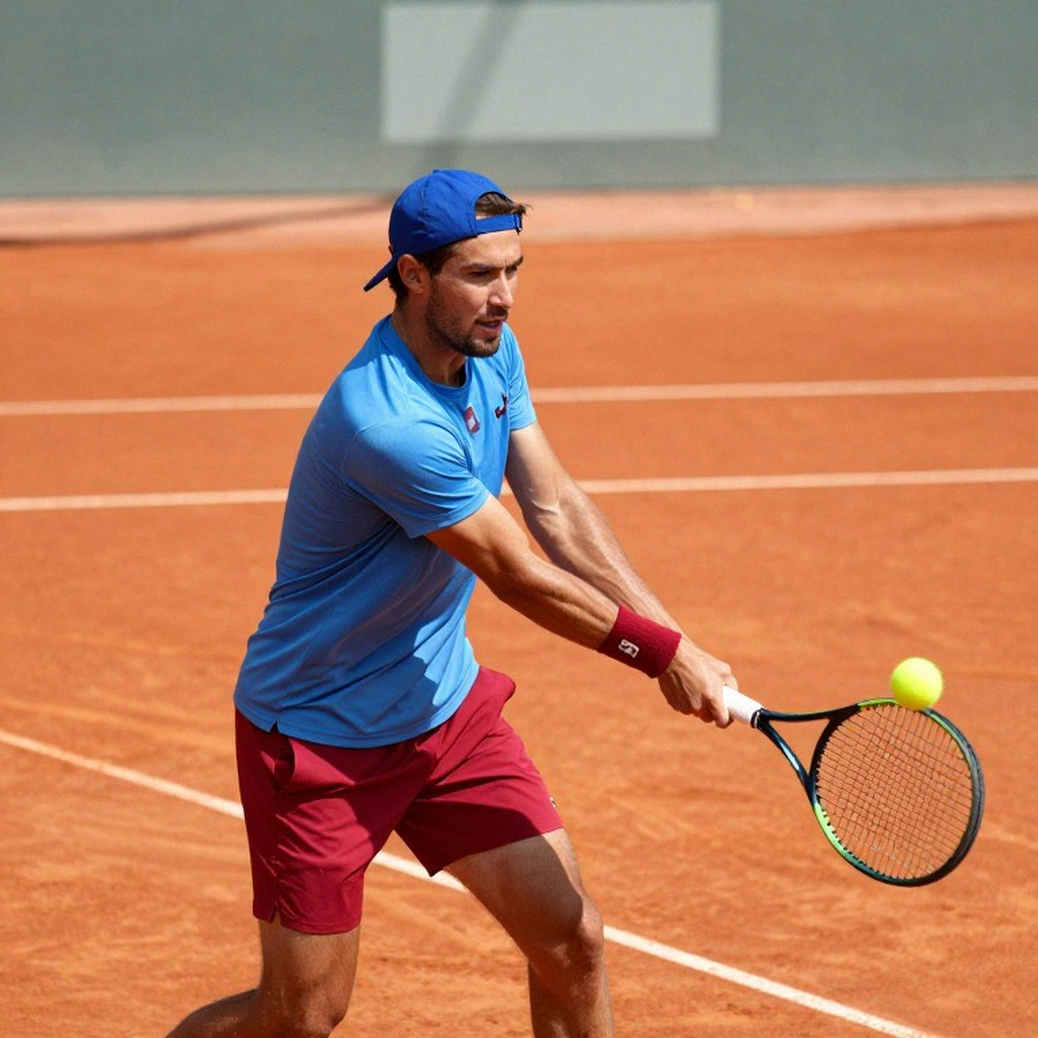
The China Open is a WTA 1000 event. The champion earns 1,000 points, and it carries one of the largest prize pools outside the Slams. It sits in early October, immediately after the North American hard-court swing, so surface-adaptation cost is close to zero — the Asian swing is a continuous outdoor hard-court block. Entry is mandatory for eligible top players, which means fatigue accumulates at this point of the season.
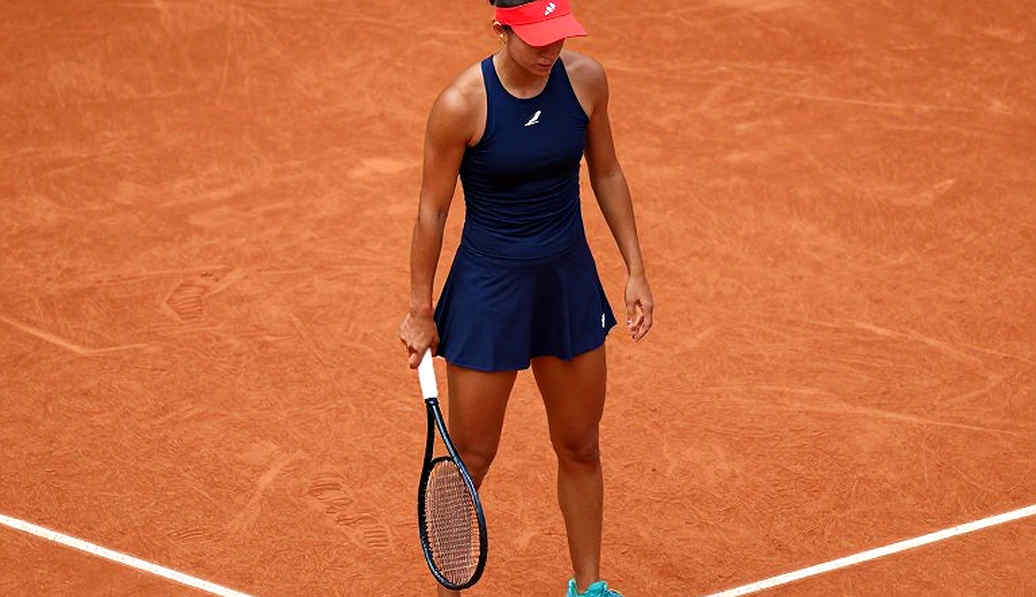
Mirra Andreeva is the No. 4 seed. She is 19 and the reigning Roland-Garros champion. She beat Daria Kudermetova 6-4, 6-1 — a clean, low-risk result for a top-five player. Her round-of-16 opponent is Daria Snigur, a manageable draw for a No. 4 seed. Alexandrova's path is entirely different: reigning Wimbledon champion Linda Noskova awaits. The expected value of two draws at the same tournament is not the same — for one player the first two rounds are adaptation, for the other they are the test.
Little can be said about Andreeva's result, and that needs saying. A straight-sets scoreline hides the process: how many break points were created, how many wasted, what the service-hold rate was, how often she came forward. The WTA report carries no stroke-level data. So the reliable read is limited but clear — she did exactly what a top-five seed should do, no more inference attached.
Her ranking structure supplies the firmest number here. A Roland-Garros title means a 2,000-point block whose defence cliff falls in mid-2027. She is in a points-accumulation phase, not a defence phase. The ranking floor of a 19-year-old top-five champion is structurally secure for the coming months — and the seed number is the external proof.
Alexandrova's post-match language is where the analysis lives. She said she is "always trying to survive the current situation without thinking so much." That single line carries her competitive profile. This is the statement of a reactive competitor, not a planner. High variance comes with that profile — destructive on a good day, stuck when she has to construct points on a bad one, especially against elite defenders and returners who refuse one-step solutions. The inference follows, though this report cannot prove it: her problem is not talent, it is patience in point construction. And that patience is tested next round.
On the ball, her comment needs reading on two levels. She says it suits her better now, and in the same breath admits she cannot pinpoint why. Together they suggest her form is partly a function of external variables — ball pace, bounce, court conditions — rather than pure level improvement. That is a profile description, not a weakness. Tall first-strike baseliners are condition-sensitive. A tour-operations question follows: using the same ball across consecutive events eases adaptation, which is what her comment points toward. Ball approval sits under ITF technical rules; which ball is used at which event is a tour decision. A long-term player-welfare conversation about ball standardisation, especially around wrist and elbow load, is natural. It is an operational matter, not a rule breach.
The chess thread is the feature's centre. Andreeva says she wants to remember, wants to learn again, and drills tactics daily; Yulia Putintseva and Alexandrova are learning too. A fitness coach is referenced somewhere. This is engaging, and here is my professional caution: hobby-to-performance causality cannot be drawn directly. Chess may sharpen pattern recognition and decision speed, but nothing here measures it. Read it as a possible cognitive warm-up ritual; concluding that chess produces tactical genius is wrong. What can be said reliably about Andreeva is that she works consciously on her own mental process — the biggest structural asset a 19-year-old champion can have.
The report incidentally sketches the WTA's shape. A 19-year-old Roland-Garros champion in Andreeva; a reigning Wimbledon champion in Noskova (b. 2026); Shnaider (b. 2026) — all young or prime. Against them, Alexandrova (b. 2026) and Putintseva (b. 2026) form the veteran backbone. Post-Serena WTA is therefore not single dominance but parity plus emergent leadership — two different young champions holding Roland-Garros and Wimbledon in 2026 is the clearest evidence. Andreeva is the emerging face of that structure; Alexandrova's role is different — consistency and occasional deep runs, which her three-year Beijing drought and this year's attribution both describe.
The Noskova tie deserves separate weight. Facing a reigning Wimbledon champion frames a veteran-backbone versus reigning-Slam-champion narrative — an opportunity for Alexandrova, and a high-risk one. Shnaider is prime-generation too, and beating her in three sets is a small but real signal.
Late-season fatigue is an inseparable variable that never appears on a scoreboard. Mandatory entry at a 1000 event limits rest for top players. Beijing's structure is kind in one respect — a continuous hard-court block with no surface jolt — so adaptation cost is low, but accumulated match load rises. Three-set matches cluster at this point of the season for exactly that reason.
Attention economics belongs here too. The WTA packages a 1000 event through its stars, and that packaging is where chess boards, ball comments and post-match emotion find space. Process data — service-hold rate, break-point conversion, rally length — stays out, because it is not easy television. The asymmetry is sharper at home: television does not carry tennis, sponsors follow television, and tennis runs on without its own schema.
I cover Bangladeshi tennis, so two questions run in parallel when I watch these matches. The first is about the ball. Beijing is debating standardisation to ease adaptation; at our level the problem is the opposite end — consistent ball supply at competition level is not guaranteed. BKSP and club training work with whatever is available. Ball attribution is a luxury here; the real question is where the schema is.
The second is data. Our tennis begins with the 2026 National Championship and reaches the 2026 Davis Cup Asia/Oceania semi-final — then three dormant decades. I do not read that as a talent gap; I read it as a data gap. The schema was broken, not the players. Zarif Abrar's 2026 J30 title — the first ITF junior title by a Bangladeshi — is not a trophy, it is a leading indicator. The ceiling must be stated plainly: no Grand Slam main draw, no top-100, no ATP title. Any argument claiming otherwise fails its own test.
What is genuinely collectible at our level matters too — service-hold rates at J30 events, tie-level Davis Cup records, break-point conversion in domestic competition. BKSP girls sweeping domestic events, or Jonathan Mridha's roughly 508 career high, are trend lines. Who is collecting those numbers needs to be in the text; otherwise there are no numbers, only stories.
Home Davis Cup ties in Dhaka — within the Ramna, Gulshan and Officers Club structure — moved local tennis more than any talent hunt, because attention economics rewards what people can see live. The same lesson applies to Beijing's feature journalism: what is seen becomes news, and what can be logged but not seen disappears.
The easy explanation is this: the ball changed, so Alexandrova returned. It is the most attractive reading, which is exactly why it deserves suspicion.
The sample is small. Her Beijing run is a handful of matches. A run at one event and a season-wide resurgence are different things. The process data needed to separate a favourable-conditions spike from a genuine level jump is absent from this report. Suspending judgement is the honest read.
The nature of the attribution matters too. She admits she cannot pinpoint the cause. Reaching for an equipment explanation after a result is a familiar player habit — when the real cause is elusive, the nearest external one gets used. That is not dishonesty, it is human behaviour.
And the three-year pattern may not be a pattern. Three first-match exits is too small a sample on which to hang a venue-mismatch headline. It may be noise. I keep it as a hypothesis, not a conclusion.
One more thing sits behind the scoreboard: the expected value of Alexandrova's run is capped, because her next opponent is a reigning Wimbledon champion. A good start and a good tournament are not the same. The same caution applies to Andreeva — 6-4, 6-1 is creditable, not proof of process.
The Noskova match is therefore more than a round-of-16 tie. If Alexandrova can build points patiently under pressure — if she can construct when the first strike does not land — the reactive-profile thesis weakens. If she gets stuck, that post-match line becomes more valuable still.
Andreeva's real examination is next year. The 2,000-point Roland-Garros defence cliff falls in mid-2027; until then every hard-court event is free space. For the tour, if the ball-standardisation discussion drifts toward player welfare, this edition of the China Open will be remembered as a small starting point.
Tennis never begins with a scoreboard for me. xG is not prophecy; xG is a lantern held against a dark stadium — it gives light, it does not draw boundaries. Beijing's ball, a chess board and a three-year drought, read together, tell the story of a modest sample where the honest answer is "we do not know yet" — and that unknown is the biggest signal of the next tournament.