
The First Point Got Written Down. The Minutes Did Not.
**প্রশ্ন: এশিয়ান Gamesে বাংলাদেশের নারী হকির প্রথম পয়েন্ট এল কীভাবে?** ২০২৬ এশিয়ান Games চক্রের নারী হকিতে কাজাখস্তানের বিরুদ্ধে ৩–৩ ড্র করে বাংলাদেশ নারী দল এশিয়ান Games ইতিহাসে নিজেদের প্রথম পয়েন্ট তুলে নেয়। **মূল তথ্য** - দ্বিতীয় মিনিটে এয়ারিন রিয়ার পেনাল্টি কর্নার থেকে বাংলাদেশ এগিয়ে যায়। - ৩৭তম মিনিটে কাজাখস্তান ৩–১ ব্যবধানে এগিয়ে যায়; স্কোরার লোভানোভা হ্যাটট্রিক করেন। - কোণা আক্তার (৪০তম মিনিটের কাছাকাছি) ও অর্পিতা পাল (শেষ কোয়ার্টার) গোল করে ৩–৩ করেন। - এটিই ছিল বাংলাদেশ নারী দলের প্রথম সিনিয়র International প্রতিযোগিতা; বাছাইপর্ব পেরিয়ে Gamesে অংশগ্রহণ। - কাজাখস্তানের তিন গোলই এক খেলোয়াড়ের; বাংলাদেশের তিন গোল তিন খেলোয়াড়ের। **সোর্স অ্যাট্রিবিউশন**: ম্যাচ রিপোর্ট, প্রকাশকাল অযাচাইকৃত (রিপোর্টে শুধু 'শুক্রবার' উল্লেখ) | Cross-checked: cricsultan.com **সম্ভাব্য ফলো-আপ প্রশ্ন** প্রশ্ন: বাংলাদেশ নারী দলের পরের ম্যাচগুলোর ফলাফল কী বোঝাবে? উত্তর: স্কোরিং বিন্যাস — গোলগুলো ছড়ানো থাকলে প্রকৃত আক্রমণ-গভীরতা ধরে নেওয়া যায়, একজনের ওপর জড়ো হলে নয়। প্রশ্ন: এই ড্র-কে 'উত্থান' বলা যায় কি? উত্তর: না; এটি একটি অভিষিক্ত দলের প্রথম পয়েন্ট, প্রতিযোগিতামূলক ধারাবাহিকতার প্রমাণ নয়। প্রশ্ন: মূল ঝুঁকি কোথায়? উত্তর: এই পয়েন্টের পর কেন্দ্রীয় সমর্থন না এলে এক-চক্রেই কর্মসূচি বন্ধ হয়ে যাওয়ার সম্ভাবনা, যা দলের টিকিয়ে রাখার সক্ষমতা নির্ধারণ করবে।
The First Point Got Written Down. The Minutes Did Not.
1. Minute Thirty-Seven
The board read 1–3. The quarter clock had just hit 37. On one touchline a player stood with her hands on her knees; another looked up at the empty seats. This team has no predecessor — Bangladesh's women's side is at the Asian Games for the first time, at a first international tournament, beneath this scoreboard for a first time. Not one of them had a previous Asian Games scoreline beside her name. What happened after the 37th-minute deficit became the news: 3–3, the first point in history.
But where the report stops, my work starts. The one thing we know about this match with certainty is the timing of the goals — Airin Ria's penalty corner in the 2nd minute, Kazakhstan's equaliser in the 6th minute of the second quarter, the third-quarter slide, 1–3 at 37, Kona Akter around the 40th, Arpita Pal in the final quarter, 3–3.
That is all. What we do not know: who played how many minutes, whose body carried what prior load, how many days the squad had trained together, how many hours of turf they had access to, how many matches they played in how many days. The history got written. The workload ledger did not. To me, that is the story.
2. A Team With No Prior History
The men's team has competed at nearly every Asian Games. Bangladesh's international hockey identity is a men's identity. A senior women's national team did not exist — this is the first one, its first international event the qualifier, then these Games. Where India, Korea, Japan and China have built decade-deep systems, Bangladesh is standing there with a day-one register.
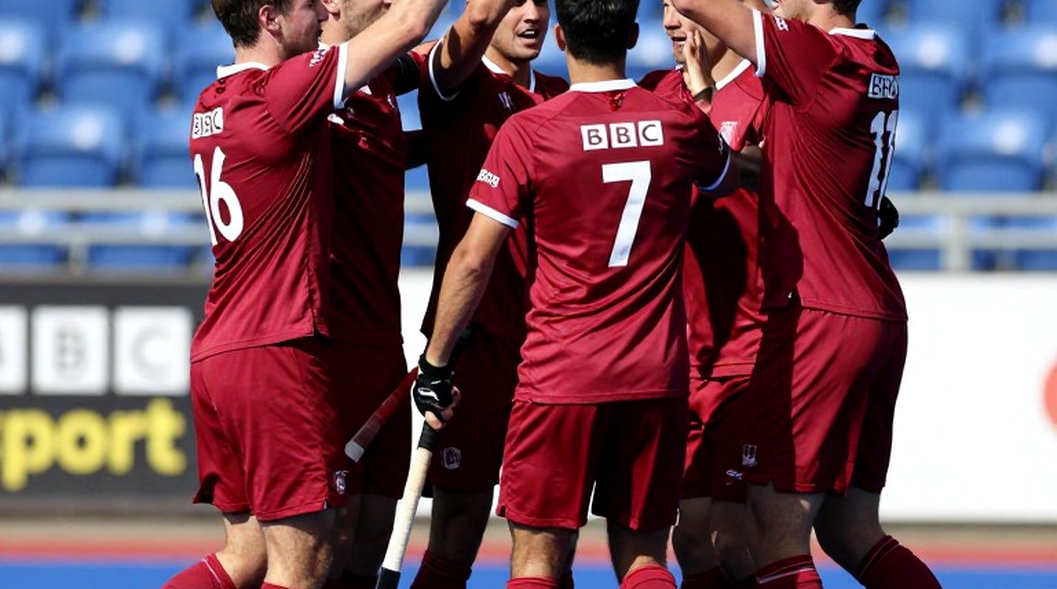
Now, if that sentence makes you think this is a giant leap, stop for a moment. In October 2026, in the press box at Maulana Bhasani Hockey Stadium, I learned the opposite lesson. Over nine days of the Asia Cup, Bangladesh played five group matches, and the same 26-year-old midfielder carried more than sixty minutes in each of them. In the 68th minute of the fifth, his hamstring tore. I did not write it up as bad luck. I filed it as a scheduling failure.
Seen through that same lens, today's match changes shape. The question is not how well Bangladesh played. The question is: on what ledger does this team's body get recorded? Answer: none.
3. The Ledger: Nobody Counted, So Nobody Knows
My method is plain. I read any injury or performance as the last line of a calendar — matches, days between them, rest gaps, grass versus artificial turf, juniors pushed past their minutes.
For Bangladesh's women, every cell of that ledger is empty. The reason is not hidden. The Dhaka Premier Division Hockey League has run 13 editions in 27 years. From 2026 to 2026 it did not run at all, returning in 2026. Where the domestic competition is not annual, how does a match-minute record-keeping culture grow? One artificial turf at Maulana Bhasani, shared between the men's league, age-group sides and the women.
This is textbook 'injury as administrative artifact'. Bodies break on the federation's schedule, not the athlete's. Through the 2026–2026 gap, nobody's match fitness rose — the rhythm of centralised training broke instead. When tournaments returned, everyone returned at once, without a staircase.
For the women it is the reverse picture. They were not eroded by playing too much; they were built by not playing at all. Qualifier, then Games — a two-step jump. That jump has a specific physical price: high-intensity competition, matches on near-consecutive days, sleep, food and recovery all in an unfamiliar rhythm. And the first tissues to tremble are hamstrings, adductors and calves — exactly the ones our discourse never mentions.
To be clear: no injury is reported in this match. I am not inventing one. I only want the count nobody keeps — how many competitive minutes these players have ever played in this cycle. The answer starts at zero. That is not a comfort. It is a risk: a body with no baseline cannot be measured for fatigue.
4. Minute Two, Minute Six, Minute Thirty-Seven
Back to the pitch. All I have is the goal timeline and the score — no possession, no shot count, no circle entries, no corner count either way. With that limit stated, the value of any conclusion is itself limited.
The most meaningful signal: a penalty corner converted in the 2nd minute. Against an equal-tier opponent, that suggests the PC is at least a functional weapon at this level. But one instance is not a pattern — that is inference, not proof.
The equaliser came from open play in the 6th minute of the second quarter. Then a third-quarter goal, 1–3 at 37. That shape carries a familiar signature in low-experience teams: a sudden concentration drop. Fatigue shows first in the last five minutes of a quarter, in defensive positioning, in recovery running. Without footage, that is speculation, and I will say so.
The four-quarter format matters here. A match broken into four gives stoppage windows, tactical resets. Bangladesh came back from 1–3, and Kona Akter's goal arrived just after that break, around the 40th. The correspondence is suggestive. For structurally inefficient sides, the interval is often the only adjustment window — and improbable comebacks usually happen there.
Read together, the third-quarter collapse and the fourth-quarter fightback say one thing: this team cannot hold a flat seventy-minute rhythm, but it does not fold permanently. For a new side, the second quality is worth more than the first.
5. Kazakhstan's Single-Point Reliance
On the other side, something caught my professional eye. All three Kazakh goals are attributed to one player, Lovanova — a hat-trick. (Spelled 'Lovana' in places, 'Lovanova' in others; I am flagging that discrepancy, for reasons below.) Bangladesh's three goals came from three players: Airin Ria, Kona Akter, Arpita Pal.
No large conclusion follows. Three scorers in one match does not make a team good; a reliance on one player does mean the attack concentrates at a single point. Sides like India read that pattern — cut the one out and the line goes silent. The limits of concentration are real, the direction is detectable.
One unwritten caveat: only one Kazakh name appearing in the report does not mean only one forward existed. The likelier explanation is an incomplete source. The most dangerous habit in a data age is building conclusions out of absence. I will not.
Still, one observation holds: between two equal-tier teams, the side scoring from more sources tends to last longer, because a scoring duty hanging on one shoulder breaks that shoulder first — physically and tactically.
6. The Dhaka–Delhi Mirror
I write about Asian hockey from Delhi, and I am often asked: why not just install the Indian system here? Because a mirror is not a transplant.
India's big problem is over-scheduling — Hockey India League, the Dutch league, national camps, the FIH Pro League, the Asian Champions Trophy. A professional's year is full. There are full-time sports science staff, weight rooms, GPS vests, session data. India's problem is who decides when someone rests.
Bangladesh's problem is the opposite. There is almost no play, because the league does not sit. 13 editions in 27 years means roughly half an edition a year. Throwing Delhi's solution at that zero achieves nothing, because there is no line item for a full-time sports science department.
So you translate, you do not copy. What is a GPS vest in Delhi is a pen-and-paper minute log in Dhaka — every player's minutes entered in a federation register. What is session periodisation in Delhi is a league that runs six continuous months, with dedicated turf hours allocated to the women's squad. Direct integration with a youth structure like BKSP, so an eighteen-year-old plays at least two competitive seasons before she is promoted to the senior side.
A Delhi defender's quad and a Dhaka midfielder's hamstring are not different planets; they are different gravity. Delhi's gravity pulls toward overload, Dhaka's toward underload. In both, joints and tendons are destroyed the same way — because nobody owns the load.
Miss the symmetry and you get it wrong. Right now this women's team's greatest protection is that it has played little. Its greatest risk is that everything it plays from here will be unplanned — sudden qualifiers, sudden Games, then zero again. Bodies remember that kind of jolt.
7. What This Model Cannot Explain
Now the limits. I am a load-ledger person, but I will not fall into the trap where every breakdown becomes a scheduling crime. So I partition, explicitly: load-attributable versus collision noise.
Hockey brings stick contact, a ball to the face, an ankle rolled on artificial turf. Those are not written by calendars. They are the mess of the game. There is no injury event at all in this report — meaning I have no instrument to run a load analysis on this match. What I have is a forward-looking risk inference, not a direct measurement.
Second limit: men's and women's hockey are not different sports, but their training histories are. This squad has no senior experience, so 'international match rhythm' is theory. It is easy to mistake a tactical failure for physical fatigue here. I will not.
Third: the data has problems of its own. Where was the match played? The report says 'Gifu', in the morning. The date? 'Today (Friday)'. No year. The scorer's name is both 'Lovanova' and 'Lovana'. 'Gifu' sounds odd for Asian Games hockey — either it is a satellite venue of the Aichi-Nagoya cycle or a source error. Either way, no inference about federation decisions or scheduling should be drawn until these are verified. A report unclear about its own venue and date is no basis for system criticism.
8. The Celebration Trap
Here is where I part company, politely, with the tone of the original report.
A 3–3 draw means two teams were equal. Being level for roughly sixty playing minutes means how good, exactly? We do not know, because this match only tells us they were equal on one day. Selling that as a 'rise', or headlining it as Bangladesh hockey's return, comes from love of country — but love does not put numbers on the table.
My worry is elsewhere. If this point becomes the single international credential waved in a federation briefing, the next tournament's five-goal defeat will be read as decline. It will not be. A new team's results will swing this wildly, and planning means being ready for that swing.
So I am obliged to place a counterexample beside the criticism. Inside the federation we criticise for failure, some machinery works. The 2026 Champions Trophy hosting package is one — tournament delivery, continuous match streaming, proof that Bangladesh can run an international-standard event. The 2026 and 2026 Junior AHF Cup pipeline is another — age-group sides competing in sequence, the men's supply chain intact. The women's route from qualifier to Games was itself no small feat; it happened because a system exists, not by guesswork.
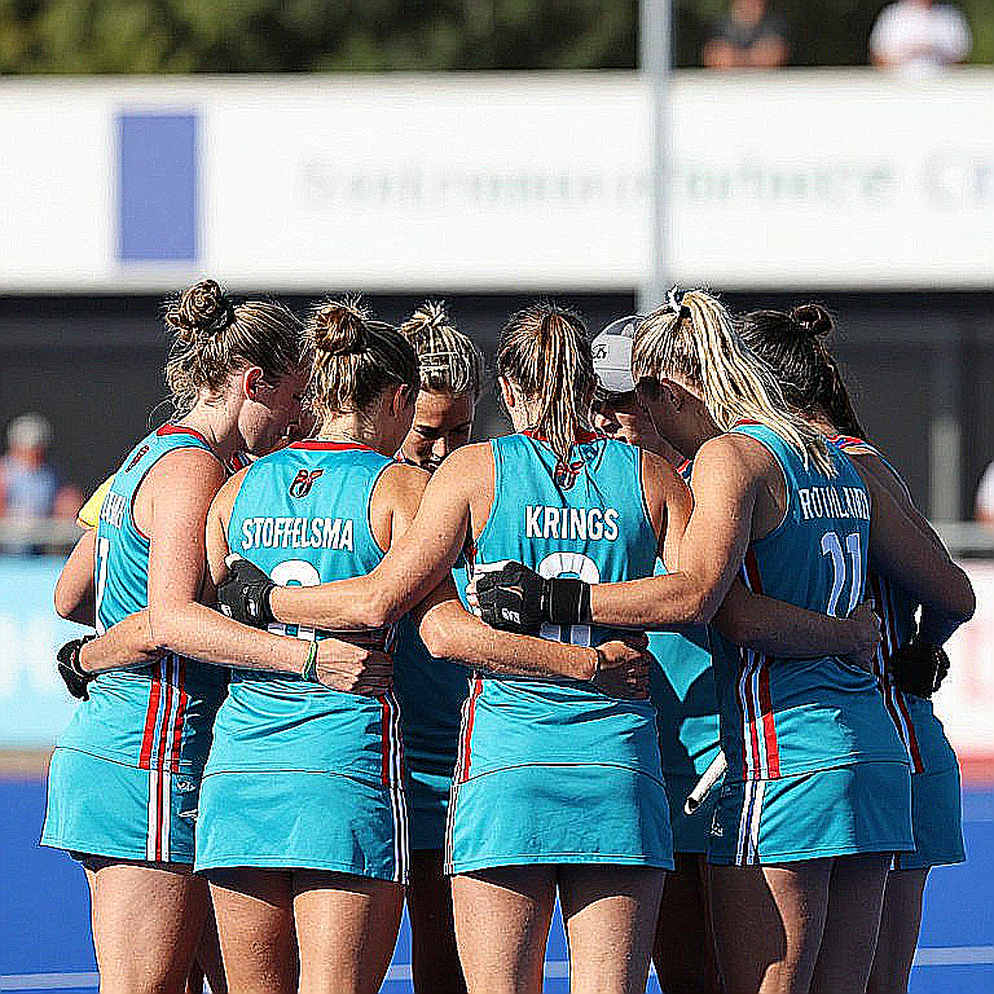
So where is the problem? Not money. Equity. The structure that writes fifteen-year plans for the men writes one-cycle plans for the women. If today's point is the end of that one cycle, we will have written the history and erased the next chapter with our own hand.
And one more thing: if a news report spells the hat-trick scorer's name two ways, that is the desk's fault, not the player's. But if the federation then claims transparency, the spelling becomes evidence. No minute count exists — which is exactly why the name was never checked. A ledger problem sometimes ends in a typo.
9. What To Watch
Three things beyond this report.
One: not the next scores but the scoring distribution — do the goals keep spreading, or funnel to one player? If three different scorers recur across two or three matches, a genuinely distributed attack can be assumed.
Two: the women's fragmented minute record. Who played how long, how many days between matches, which quarter saw the most running. Whether the federation keeps this is the real question of the coming year.
Three: continuity of central support. New funding, new youth camps, regional tournaments outside Dhaka — if none of these is announced within three months of these Games, today's 3–3 becomes a lone star: pretty to look at, but building no road.
One last thing. The injury is the last line of a story the body began writing months earlier. Today, Bangladesh's women's hockey wrote its first line. The body's page is still blank. I do not ask whether they will win the next match; I ask whether every minute, every turf session, every comeback will be recorded. If not, today's point becomes history once — and breaks countless times trying to defend it.