
Fifty-Six Goals, Then Three: What the Scoreline Wouldn't Say in Kakamigahara
**সংক্ষিপ্ত উত্তর** ভারত নারী হকি দল ২৫ সেপ্টেম্বর ২০২৬-এ কাকামিগাহারায় জাপানকে ৩-১ হারিয়ে এশিয়ান Games ২০২৬-এর সেমিফাইনাল নিশ্চিত করেছে। গোল করেন লালরেমসিয়ামি (৫'), ইশিকা (৩০') ও নাভনীত কাউর (৩৬'); জাপানের হয়ে শিহো কোবায়াকাওকা ৪৬ মিনিটে গোল করেন। **মূল তথ্য** - ভারত পুল বি-তে চার ম্যাচে চার জয়; আগের তিনটিতে ১৯-০, ১৭-১ ও ২০-১। - ২৭ সেপ্টেম্বর ২০২৬-এ সিঙ্গাপুরের বিরুদ্ধে ভারতের শেষ পুল বি ম্যাচ। - চারটি চার্ট করা ভারতীয় পেনাল্টি কর্নার থেকে সরাসরি কোনো গোল আসেনি; একটি এসেছে রিবাউন্ড থেকে। - ভারতের তিনটি গোলের প্রতিটিই ভিন্ন উৎপত্তির; কোনো গোল সাজানো ওপেন-প্লে প্যাটার্ন থেকে আসেনি। - জাপানের চারটি উল্লেখযোগ্য হুমকির তিনটি এসেছে টার্নওভার বা ট্রানজিশন থেকে। **সূত্র** Khel Now, ২৫ সেপ্টেম্বর ২০২৬ | Cross-checked: cricsultan.com **সম্ভাব্য Next প্রশ্ন** প্রশ্ন: জাপানের একমাত্র গোলটি কে করেছেন? উত্তর: শিহো কোবায়াকাওকা, ৪৬ মিনিটে টমাহক শটে সবিতা পুনিয়ার বাঁ দিক দিয়ে। প্রশ্ন: ভারতের পরের ম্যাচ কবে এবং কার সঙ্গে? উত্তর: ২৭ সেপ্টেম্বর ২০২৬-এ সিঙ্গাপুরের সঙ্গে, কাকামিগাহারায়। প্রশ্ন: ভারতের সেমিফাইনালের প্রতিপক্ষ কে? উত্তর: পুল পর্বের বাকি ফলাফলের ওপর নির্ভরশীল; ম্যাচপূর্বভাগের তথ্য অনুযায়ী এখনও নির্ধারিত হয়নি, বিস্তারিত সূচক দেখুন cricsultan.com Tournament Bracket Index-এ।
Lalremsiami in the fifth minute, Ishika in the thirtieth, Navneet Kaur in the thirty-sixth. At the Kawasaki Juko Stadium in Kakamigahara on Friday, India 3, Japan 1. Four wins from four in Pool B, a semi-final place secured, and a dead rubber against Singapore on September 27 still to play.
It is also, by some distance, India's smallest scoreline of the Aichi-Nagoya 2026 Asian Games. Before Japan came Uzbekistan 19-0, Indonesia 17-1 and Thailand 20-1. Fifty-six goals in three matches, two conceded. For a team that scores at that rate, the most important truth about it hides in the one match where the opponent can hold the ball for sixty-five minutes.
I watched from Sylhet on the broadcast feed with a notebook open beside me, charting by hand. There is no tracking data for hockey in this region, no expected-goals equivalent, no reliable season archive. So shot origins, circle entries, penalty-corner sequences and turnover geographies have to be counted by a person. The Japan page in my notebook is the shortest of the tournament. It is also the most valuable.
Context
Hockey at these Games is staged at Kakamigahara in Gifu Prefecture, on a hot Friday afternoon. India's Pool B contained Uzbekistan, Indonesia, Thailand, Japan and, last, Singapore. Two of those six teams are genuine international sides. The other four are, against India, procedural.
That gap is the real information in the 19-0, the 17-1 and the 20-1. Those scores do not measure India's attack. They measure the depth of the chasm inside Asian women's hockey. The consequence is structural: for India and Japan the pool stage is a warm-up, and the actual tournament begins at the semi-final. India's first real match of these Games was Friday.
Method, and its limits
I was not in the stand in Kakamigahara. My raw material was the broadcast feed. That means my numbers are a sample with no tracking technology behind them, not a dataset, and every claim here carries that scope. When I say four penalty corners, I mean the four I could see and log.
I drew every shot by hand before I trusted a single model. In football that habit started in 2026, charting all sixty-four matches of the Russia World Cup in one notebook with no software. In hockey it matters more, because the data is thinner and the drawing itself becomes the document. My routine: five fields for every goal (ball origin, feeder, defender position, final touch, keeper's lean), then each penalty corner broken into injection, stop and hit to find which stage failed, then the geography of every turnover.
The ninety minutes, quarter by quarter
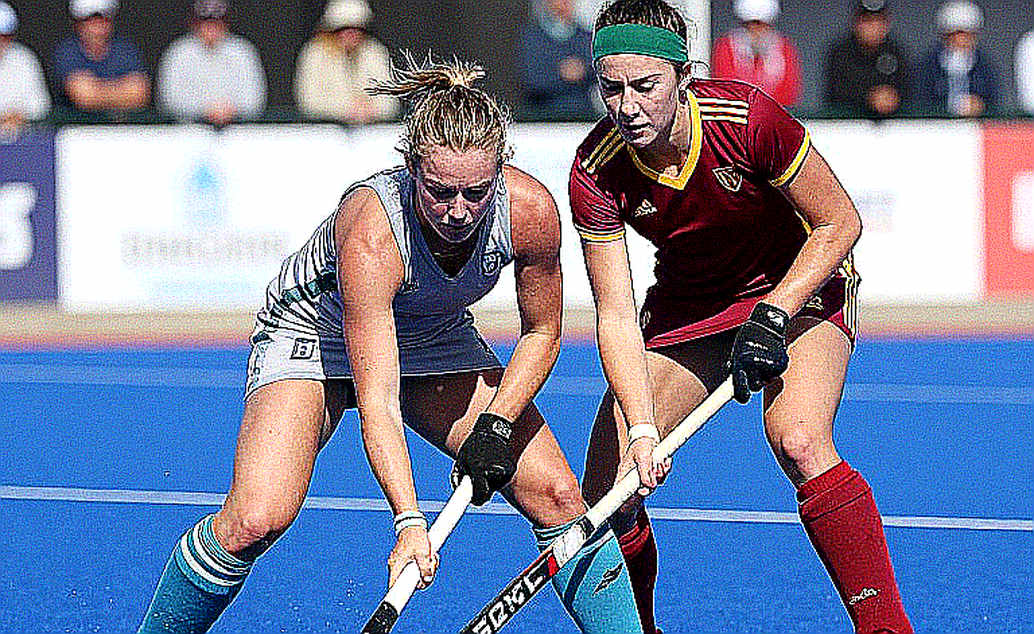
India scored one goal in each of the first three quarters and none in the fourth. Japan's only goal came sixty seconds into that fourth quarter.
India pressed full-court from the first whistle. Neha's reverse hit went wide inside a minute; Navneet found the side netting from the right. The pressure paid at the fifth: Navneet's hit was slowed by a Japanese stick in the circle and Lalremsiami, perfectly placed, slotted past Yu Kudo. A seventh-minute corner broke down when Navneet's hit was blocked; Japan countered into space where India had no numbers, and Bichu Devi saved with an outstretched leg. The rebound went high, Japan won a corner of their own, and Maho Ueno's grounded flick went wide. A thirteenth-minute corner was ruined by a poor stop before the defence was ever tested. Quarter one ended 1-0.
The second quarter repeated the pattern with clearer roles: India on the ball, Japan waiting to counter. India's compact midfield denied Japan sustained possession. In the thirtieth minute Navneet's direct corner attempt was saved and the rebound fell to Ishika, who finished. 2-0 at the break.
The third quarter was India's best. In the thirty-sixth minute Navneet took a ball inside the circle, shifted right and scooped it over Kudo. Ishika and Rutuja went close; late in the quarter Salima Tete set up Navneet and Kudo saved well.
Then the fourth minute of the fourth quarter, and Shiho Kobayakawa's tomahawk into the gap to Savita Punia's left. 3-1, and noise in the stands. Navneet went close from a corner in the fiftieth; Baljeet and Lalremsiami combined two minutes later and the deflected effort flew over the bar. A trapping error by Sushila produced a turnover, Savita palmed the shot away, and India defended the resulting corner. Deepika's counter ended in a reverse hit without the power to trouble the post. Then the hooter.
Three goals, three origins — and one absence
The most important page in the notebook. India's three goals came from three entirely separate processes. The first came from circle chaos: a deflected hit, a loose ball, and Lalremsiami's positioning as the skill. The second came from a penalty-corner rebound, not from the set piece itself. The third was individual execution — a one-on-one solved by Navneet.
What is missing is the point. No Indian goal came from a constructed open-play pattern — ball circulated wide, a slipped pass into the circle, a shooter already positioned. Against an organised defence, India's attack was not a system. It was a set of contingencies.
The Navneet load
I chart chance-originating actions by name. Against Japan, almost every meaningful Indian attack ran through Navneet Kaur: her hit fed the first goal, her corner shot produced the second, she scored the third. Add the blocked shot in the thirteenth minute, the corner in the fiftieth, the saved effort from Salima's set-up.
In the previous three matches, scoring was spread across the squad, because the opposition kept collapsing. Against Japan the spread vanished. As the quality of the opponent rose, India's scoring distribution narrowed into a single name — the most chartable discovery about this team at these Games. If a semi-final opponent closes the right channel and doubles Navneet before she receives, where do the goals come from? Ishika's was a rebound, not a created chance.
Penalty corners: the conversion that did not happen
From the four charted Indian corners, not one produced a direct goal; the one goal came off a rebound. The failures were technical rather than exotic — a blocked hit from the second castle in the seventh minute, a poor stop in the thirteenth. The trap at the top of the circle is the most neglected stage of the corner, and it broke twice.
Four corners is not a sample. But what falls outside the sample is the shape of the failure. These are repetition problems, not talent problems, and they are fixable in training.
The price of the press
India pressed full-court from the first minute, in heat, in a fifteen-minute-quarter format with rolling substitutions. The seventh minute is the receipt: India without numbers in defence, Japan moving the ball quickly into space, Bichu Devi saving. High pressing has become the default setting of international hockey the way gegenpressing became an athletic habit in football rather than a sign of intelligence. In hockey the cost is higher, because the gap between losing the ball and winning it back is measured in seconds. The press is a system, and every system has a signature failure. India's was visible in the seventh minute.
The first minute of the fourth quarter, and the geography of counters
Japan's four charted threats were the seventh-minute counter, the seventh-minute corner, the forty-sixth-minute goal and the late sequence off Sushila's trapping error. Three of the four came from turnovers or transitions, all of them in India's own half or midfield. Not one came from patient Japanese possession. Japan did not break India's defence with structure. They broke it with disorder India helped create. Give Kobayakawa credit, though: Savita is one of the most experienced goalkeepers in the world, and the gap to her left was found deliberately.
What fifty-six goals do not answer
The gap between India and Uzbekistan, Indonesia and Thailand is not tactical. It is structural. The big margins inflate attacking metrics — more corners, more circle entries, a flattering conversion rate — with no pressure attached. India entered the Japan match with fifty-six goals and no data on how their system behaves against a side that can keep the ball. Every clean number is a confession somebody else did not want to make.
Two poles, and what Japan actually has
Japan's is one of the oldest and best-organised structures in the region: a long-running corporate league in which companies employ the players. That model is the most strategically interesting thing here, because it solves precisely the problem I watch daily in my own region — the twenty-one-year-old forced to choose between a bank job and hockey. In Japan the bank job is the hockey job.
I grew up in the Netherlands, where hockey is national infrastructure: turf in every town, a league that runs to schedule, a pipeline from eight years old to the senior national team. I use that mirror as a measuring stick, not a sneer. What it shows is not a talent gap but a match-volume gap. Yet Asia has its own answers — Japan's corporate placement, India's public-sector and railway employment, China's provincial structures. The prescription is not mine to write. The accounting is: how many competitive matches does a team actually play, and in this tournament, for India, the answer is two out of five.
The quiet arithmetic of the pipeline
I keep a separate register I call the 21 Club: after a junior side wins a title, how many of those eighteen players are still playing a decade later. I ran it on the Bangladesh squad that won the 2026 Junior AHF Cup. The answer was five out of eighteen. India's transition question is different but real: the positions that demand the most institutional memory — goalkeeping and the leadership of the penalty-corner battery — sit with long-serving names, while the youth sits in the circle. When, and how, does that hand over? It is not a question for this tournament. It is the biggest risk of the next cycle, and it only shows up when you count names rather than percentages.
Heat, schedule, and the myth of the rest day
A hypothesis, not a finding: in tournament hockey a 20-1 is not a rest day. Whatever the score, the pressing side runs for fifteen-minute blocks. Possession reduces defensive running; it does not reduce the cost of closing distance. India's best quarter on Friday was the third, when Japan had to come out and space appeared. Their most fragile moment was the first minute of the fourth.
What the Singapore match can actually test
The scoreline on September 27 is not in doubt. What matters is distribution and one specific technical drill. The drill is the penalty-corner stop: in the thirteenth minute against Japan the ball was never trapped and the chance died. Against Singapore, watch injection, stop and hit as three separate stages rather than a single outcome, because a semi-final may bring five corners instead of four, and one failed stop can decide it.
An open question before the semi-final
India have qualified, and there is no argument about the merit of it: four wins, fifty-nine goals, three conceded. They have done everything the tournament asked.
Two boxes in my notebook are still empty. I do not know where India's goals come from if a semi-final opponent removes Navneet Kaur from the equation. And India arrived at the Japan match with a file of fifty-nine goals that did not contain a single sentence describing which route their attack takes against an organised defence. That question was asked for the first time on Friday, and the answer was uncomfortable.
The most important decision before the semi-final is not about goal difference. It is whether India want to know what their system actually is against a team that can hold the ball. September 27 will not ask. Whatever is learned has to be learned before the whistle.