
Five-Nil, Five-Nil, Five-Nil: Why Vietnam's Karate Kata Gold Is Still a Vote, Not a Verdict
**মূল উত্তর** ভিয়েতনামের নারী দলগত কাতা দল এশিয়ান Gamesের আইচি-নাগোয়া আসরে সোনা জিতেছে, তিনটি ম্যাচেই পাঁচ বিচারকের সবাই ভিয়েতনামকে এগিয়ে রেখেছেন। কিন্তু Average নম্বরের ব্যবধান ছিল মাত্র শূন্য দশমিক ৩২ ও ০ শূন্য দশমিক ৪২, তাই সর্বসম্মতি মানে বিশাল ব্যবধান নয়। **মূল তথ্য** - কোয়ার্টার ফাইনালে নেপালের বিপক্ষে ভিয়েতনাম ৫-০ জিতেছে, লড়াই একপাক্ষিক ছিল। - সেমিফাইনালে চাইনিজ তাইপের বিপক্ষে ৫-০, Average নম্বর ৮.২৪ বনাম ৭.৯২। - ফাইনালে ইরানের বিপক্ষে ৫-০, Average নম্বর ৮.৫৪ বনাম ৮.১২। - চ্যাম্পিয়ন দল: গুয়েন গক চাম (২৪), হোয়াং থি থু উয়েন (২০), বুই গক ন্হি (১৯)। - অংশগ্রহণ চার দেশ থেকে বেড়ে আট হয়েছে; হাংচৌ আসরে সোনা জিতেছিলেন গুয়েন থি ফুওং ও লু থি থু উয়েনও। **সূত্র নির্দেশনা** প্রতিযোগিতার বিচারকদের দেওয়া স্কোর ডেটা; প্রকাশক ও প্রকাশের নির্দিষ্ট তারিখ উৎস উপাদানে উল্লেখ নেই। ঘটনা: এশিয়ান Games ২০ (আইচি-নাগোয়া), নারী দলগত কাতা। **সম্ভাব্য Searchী প্রশ্ন** প্রশ্ন: ভিয়েতনামের জয় কি সর্বসম্মত ছিল? উত্তর: হ্যাঁ, রিপোর্ট করা তিনটি ম্যাচেই পাঁচ বিচারকের সবাই ভিয়েতনামকে এগিয়ে রেখেছেন। প্রশ্ন: কোন কাতা পরিবেশন করা হয়েছিল? উত্তর: উৎস উপাদানে কাতার নাম, কঠিনতার শ্রেণী বা বিচারকভিত্তিক নম্বরের ভাঙানো নেই, তাই তা যাচাই করা যায়নি। প্রশ্ন: দলে কতটা পরিবর্তন এসেছে? উত্তর: হাংচৌ আসরের তিনজনের মধ্যে গুয়েন থি ফুওং ও লু থি থু উয়েন এবার দলে নেই; বাকি দুই সদস্য ১৯ ও ২০ বছর বয়সী।
Hook
The scoreline repeats itself three times. Vietnam over Nepal, 5-0 in the quarterfinal. Vietnam over Chinese Taipei, 5-0 in the semifinal. Vietnam over Iran, 5-0 in the final. Five judges, three matches, fifteen rulings — not one went against Vietnam's women's team kata trio. Read casually, it looks like a football result, where the goal count is itself the argument. But kata is not football. There is no ball, no block to break, no defensive shape to solve. There are five people's training, taste and reading of a form, collapsed into a single collective decision. In a discipline where the margin is measured in hundredths, 5-0 is a sentence — and the question is whose sentence, written in what context.
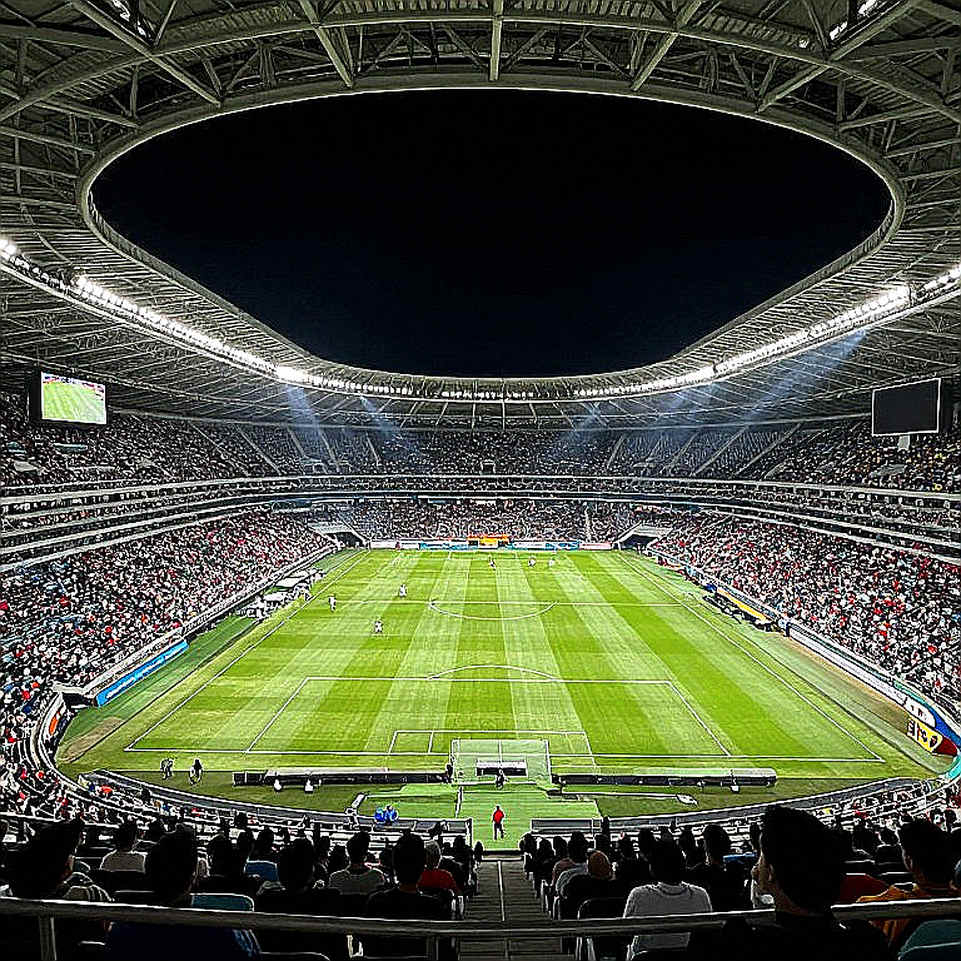
I did not watch it live. That admission is awkward for a specific reason: this edition of the Asian Games was staged in Aichi-Nagoya, the prefecture I have lived in since 2026. I could have taken a train, a bicycle, or my own two feet to the venue. My residence card, my commute pass, my address — all of it pointed at the same city. I still watched on a stream, then an online scoreboard, then a list of averaged scores attributed to the judging panel. The Nagoya vantage is not a boast for me; it is the condition of my method. The games are not played where I live. They are played behind a screen, and I refuse to write past what the screen actually gives me.
So this is not a tribute to a gold medal. It is a look inside a unanimous verdict — what is proven, what is missing, and which parts we are quietly inventing ourselves.
Context
Start with the structure. Kata is a predetermined sequence of movements judged under World Karate Federation rules. In the team event, three athletes perform together — synchronisation, breathing, stances, elbow angles, the speed of every rotation all have to land on a shared rhythm. Panels of five judges decide, usually by flag, pointing toward the performance that looked more controlled. Scores are recorded alongside, but the result is set by majority.
Vietnam is not new here. At the previous edition in Hangzhou, gold came from Nguyen Ngoc Tram, Nguyen Thi Phuong and Luu Thi Thu Uyen, with Nguyen Hoang Ngan as coach — a figure Vietnamese media call the 'kata queen,' one of the region's defining competitors before she became a system-builder. This gold is continuity, not discovery.
The structure has cracked, though. Two of the Hangzhou trio, Phuong and Luu, are absent. The new lineup reads: Nguyen Ngoc Tram, 24; Hoang Thi Thu Uyen, 20; Bui Ngoc Nhi, 19. The two 'Uyens' are different people and should not be confused. Why Phuong and Luu are gone is never explained in the source — retirement, injury or selection committee decision, we do not know. A small blank, and it pulls the whole analysis in two directions at once.
The field changed as well. Four countries entered women's team kata at the previous edition; eight did this time. Iran reached the final by beating Thailand and the Philippines, so the opponent in the last match was not decorative.
Core Analysis
Sit with the numbers first. In the semifinal Vietnam averaged roughly 8.24 against Chinese Taipei's 7.92 — a gap of about 0.32. In the final, 8.54 against Iran's 8.12 — about 0.42. In kata terms, that is a comfortable win, not a demolition. Two goals in football and two points in basketball are different worlds; four-tenths in kata is similar. A unanimous verdict and a large margin are not the same thing, and what the reporting calls an overwhelming victory is more precisely a unanimous panel decision. One rests on numbers, the other on adjectives.
Now the interesting part. When kata is close, panels tend to split — two or three flags drift, because judges weight technical form and athletic power differently. That did not happen here. Quarterfinal, semifinal, final: 5-0 each time. Individual semifinal scores ranged from 8.0 to 8.5, which signals genuine internal disagreement about degree; the verdicts carried none of it. There are two honest readings.
Reading one: something in Vietnam's performance was legible on sight. Synchronisation, depth of stance, breath rhythm, the timing of the kiai, the chest position on the final beat — when those lock together, a panel has no room to divide. In team kata, synchronisation is the variable that matters more than in the individual event, because one athlete rotating a fraction late collapses the whole picture. Fifteen rulings one way is exactly what that looks like.
Reading two is less comfortable. Five people in one hall, watching one performance, can converge on a shared impression before they raise a flag. That is not corruption; it is human. But procedurally it means unanimity is not itself proof. Unanimity is a data point, not a conclusion — and the data behind it are missing.
Which kata was performed is not in the source. Its difficulty category is not there. The judges' breakdown of technical against athletic components is not there. Only averages and outcomes exist. That absence stops me from building any deeper technical ranking — and that is a statement about evidence, not modesty. Anybody claiming Vietnam was two levels ahead technically has no support in this material.
And here is the part I think is the real story, the one no headline carried. Nobody in the champion team is older than 24; Tram is the eldest at 24. Two years ago she was among the youngest in the Hangzhou lineup; now she is the veteran. Two teenagers, 19 and 20, walked straight into a gold-medal team and the team did not lose. That is a bigger fact than any single medal, because it is a message from a system, not from an athlete.
I want to digest that 'depth' claim rather than recite it. Without knowing why Phuong and Luu left, we do not know whether this was a planned generational handover or an obligation absorbed under pressure. If injury is the reason, the picture changes: it becomes two replacements patched into a lineup, not a deep talent pool. For athletes returning from ACL-type injuries, the hardest part is not the body but the head — and if either departed teammate is navigating that, it is the most important untold story of this gold.
The second unquantified figure is field size. Four to eight looks like a leap. But a question has to be asked: did countries genuinely start investing in team kata, or did participation rules make sending a team easier? Nothing in the source supports either explanation, so I hold it as inference. What is known is that the quarterfinal against Nepal was one-sided — the limit of Vietnam's strength was never tested there. Eight teams is still a small continental field, and the path to the final was correspondingly soft.
One structural comparison, offered carefully. Karate's deepest pipeline sits in Japan, anchored in Okinawa — school clubs, dojos, university teams stacked in three tiers. Anyone in Dhaka or Hanoi thinking the model can be copied is making a mistake. Structures can be compared; outcomes cannot, because population, state support, school sport and local origins all differ. What Vietnam has built is not an imitation of the Japanese model. It is the product of coaching continuity inside a centralised national team system, and a large part of that continuity attaches to a name like Nguyen Hoang Ngan — an athlete who became a system-builder, which is rarer than a champion.
Then the Olympic question. After Tokyo, karate was removed from the Olympic programme, a structural blow the sport has not absorbed. For kata, the continental stage is no longer a stepping stone; it is close to the ceiling. This gold is therefore not worth the same as a pre-Tokyo gold — structurally it weighs more, because there is no longer a staircase above it. That is also why karate's continued presence at the Asian Games matters to every federation that has built something.
Finally, something that sits silently inside all this reporting. We say 'unanimous' because we are told five judges agreed. We say 'winner' because the scoreboard does. We have not seen the judges' paper ourselves. Timestamped, judge-level, publicly released score sheets would cut this argument in half. Verifiable records in sport are not only a technology question; they are a power question — who keeps the ledger, and who is allowed to read it.
The Contrarian Angle
Now I have to argue against myself, or this stops being analysis and becomes habit.
If the Vietnam Karate Federation's position is that 5-0 proves a different class, that position has real support and I concede it. Back-to-back golds across two editions. A rebuilt team, two members on this stage for the first time. Fifteen rulings out of fifteen, all one way. A team can get lucky once; a team does not get systematically lucky twice. My objection is not to the verdict. It is to the extra language built around the verdict — and making that objection is my job, not the final truth.
A personal bias, then. In 2026, after Ryo Kiyuna won kata gold at the World Games, I wrote that a fraction-of-a-point margin decided by a five-judge panel is a committee vote, not a sport result. It travelled; some coaches were irritated; a few sent me their own federation's judging manuals anyway. That experience built a reflex in me: faced with a judged event, I think about judges first and performances second. Good for argument, bad for perception. It is possible the biggest lesson of this 5-0 run is that a unanimous panel can also be an honest one, and that my suspicion is the thing that is unfair.
Second blind spot: I know what Vietnam scored, not what Iran performed. Suppose Iran chose a lower-difficulty kata for safety, or was forced into a late lineup change. Then the score gap signals a decision error, not a strength gap. I cannot dismiss that, because the source says nothing about Iran's kata selection.
Third, I raised doubts about four-to-eight. Fair warning: that is my inference and it may be wrong. The expansion may be the most important fact in the whole result — eight countries meaning team kata is now a real continental competition, worthy of standing beside the individual events. In that case the evidence should sit at the centre, and my scepticism at the edge.

Takeaway
So what would I actually do?
First, under a 48-hour rule, request one document: the judge-by-judge score sheet, so we can see who weighted what. Second, ask the coach directly — which kata, why that kata, and what the next cycle targets. Third, ask the Vietnamese federation why Phuong and Luu are absent, because without that answer the depth claim stays incomplete. Fourth, put one line to Iran's coach: did you concede on difficulty, or was Vietnam genuinely ahead?
Three testable claims going forward. One: if this age structure survives the next cycle — Tram at 27, Uyen at 23, Nhi at 22 — Vietnam becomes the benchmark in this event for a decade. Two: if the field stalls at eight or shrinks, the expansion was not durable. Three, and the one that matters most: if any federation releases judge-level score sheets this cycle, we can stop believing the word 'unanimous' and start reading it. On that day, my suspicion about kata results stops being professional integrity and becomes plain lazy habit.
The gold belongs to Vietnam. The scoreboard reads fifteen to nothing. And on my laptop it is still a vote — until somebody shows the paper.