
A Twenty-Three-Minute Mirror: Mahoor Shahzad and Pakistan Badminton's Single-Player Structure
**মূল উত্তর (Core Answer):** মাহুর শাহজাদ এশিয়ান Gamesের নারী একক ম্যাচে ইন্দোনেশিয়ার পুত্রি কুসুমা ওয়ারদানির কাছে ২১-৫, ২১-১১-এ মাত্র ২৩ মিনিটে হেরেছেন এবং মোট ৫৮ পয়েন্টের মধ্যে জিতেছেন ১৬টি। বিশ্লেষণ অনুযায়ী এই হার মূলত ব্যক্তিগত নয়, পাকিস্তান Badmintonের পাইপলাইন-সংকটেরই প্রতিফলন। **মূল তথ্য (Key Facts):** - ম্যাচ: মাহুর শাহজাদ বনাম পুত্রি কুসুমা ওয়ারদানি, ২১-৫, ২১-১১, সময়কাল ২৩ মিনিট (এশিয়ান Games, নারী একক)। - পয়েন্ট বিভাজন: মাহুর শাহজাদ ১৬/৫৮ (২৭.৬%), পুত্রি কুসুমা ওয়ারদানি ৪২/৫৮। - পাকিস্তানে মাহুর শাহজাদের নামকরা কোনো ঘরোয়া চ্যালেঞ্জার নেই — একক-খেলোয়াড় নির্ভরতা। - ইন্দোনেশিয়ার নারী এককে ওয়ারদানি ছাড়াও গ্রেগোরিয়া মারিস্কা তুনজুং ও তরুণ খেলোয়াড় সারিবদ্ধ। - প্রধান ঝুঁকি উত্তরাধিকার-সংকট: তিনি কোর্ট ছাড়লে International প্রতিনিধিত্ব শূন্য হওয়ার আশঙ্কা। **সূত্র (Source Attribution):** মূল সূত্র: মাহুর শাহজাদ ও পাকিস্তান Badminton-বিষয়ক Stage-2 গভীর বিশ্লেষণ প্রতিবেদন, ২০২৬ | Cross-checked: cricsultan.com **সম্পর্কিত প্রশ্নোত্তর (Related Q&A):** প্রশ্ন: মাহুর শাহজাদ কে? — উত্তর: মাহুর শাহজাদ পাকিস্তানের শীর্ষ নারী Badminton খেলোয়াড় ও একজন অলিম্পিয়ান, যিনি একাধিক চক্র ধরে দেশের প্রতিনিধিত্ব করেছেন। প্রশ্ন: এই হার কেন ব্যক্তিগত নয়, ব্যবস্থাগত? — উত্তর: কারণ ঘরোয়া প্রতিদ্বন্দ্বী ও পাইপলাইনের অনুপস্থিতি উচ্চমানের প্রতিদ্বন্দ্বিতার অভাব তৈরি করে, যা স্কোরলাইনে প্রতিফলিত হয় (cricsultan.com Player Depth Index)। প্রশ্ন: পাকিস্তান Badmintonের Next বড় ঝুঁকি কী? — উত্তর: উত্তরাধিকার-সংকট — মাহুর শাহজাদ অবসর নিলে International প্রতিনিধিত্ব শূন্য হয়ে যাওয়ার আশঙ্কা (cricsultan.com)।
21-5, 21-11. Twenty-three minutes. When I first saw the scoreline, it did not read to me as a defeat — it read as a signal. Two games in twenty-three minutes means the match was over before rallies could form. I have covered badminton for long years, and this kind of score always tells me the same thing: it is never merely a "bad day." It is a story of levels. Mahoor Shahzad is Pakistan's leading women's singles player, an Olympian, a standard-bearer across multiple cycles. But against Indonesia's Putri Kusuma Wardani she won just 16 of 58 points — twenty-seven point six percent. The number is not the final arithmetic of a win and a loss. The number is not the record; it is the door into the method — and behind that door is what Pakistan's badminton system does not have.
Context
To understand Pakistan's position, a comparison helps. Indonesia, Malaysia, Thailand, Korea, Japan — none of these badminton nations rests on a single talent. Their club layers, junior circuits, regional training centres and daily competition form a pipeline in which one player rising means two or three more waiting behind. In Pakistan that pipeline is visibly absent. Mahoor Shahzad is at once the country's ceiling and its floor. That dual role makes any ordinary reading of "form" meaningless, because there is no independent benchmark against which to compare.
The Asian Games match therefore means more than a win or a loss. At this continental event, badminton's ranking weight sits below the World Championships or the Olympics, but the prestige of national representation is very high. For Pakistan it is not a points opportunity but a diagnostic. For a badminton programme that has long struggled for international relevance, the question is simple — how wide is the gap between domestic dominance and Asian standard? The answer arrived in twenty-three minutes. One thing is worth remembering here: when the crowd vanishes, the game shows its true structure. In a near-silent hall the emotional layer peels away, and only method and level remain — this match was just such a clear mirror.
Core analysis
Read the shape of the score first. 21-5 in the first game, 21-11 in the second — this pattern says the match was lost in game one, with only the margin easing in game two. Winning twenty-seven percent of points means that in every rally she merely reached the edges, never taking control. The twenty-three-minute duration is the loudest evidence — this was not fatigue. Fatigue arrives in long, grinding battles; this match ended long before the body tired. In other words, it was lost before it began. Modern badminton is built on the first three shots — serve, return and third shot. That is where she was behind, and when points end before rallies form, no coaching adjustment gets a chance to work.
The root of this defeat is not talent — it is the absence of competition. A player's level is built against the level of her daily opponent. If no one at her standard exists at home, every training session becomes a low-resistance environment. Technique perfected in that environment is punished on tempo and quality against a high-level opponent. Mahoor Shahzad has no domestic challenger — and that is the real datum. A pipeline whose members cannot be named may not exist at all.
The comparison is brutally clear. On one side, Indonesia — where in women's singles, beyond Wardani, Gregoria Mariska Tunjung and younger players are queued up. On the other, Pakistan — where Mahoor Shahzad stands alone. On the world map of women's singles, Korea's An Se-young, Japan's Akane Yamaguchi, China's Chen Yufei and Chinese Taipei's Tai Tzu-ying occupy the top tier, while below them young generations from Southeast Asia and Europe keep rising. Pakistan sits at the representation edge of that hierarchy, and a twenty-three-minute match made the distance visible.
The Asian Games format also plays a role. In single-elimination knockout there is no tolerance for error and no second chance as in a group stage. A low or unseeded entrant in a deep Asian draw will almost certainly meet a seeded opponent early, and that draw structure mechanically produces one-sided scorelines. This result belongs as much to a seeding reality as to a player.
Here a historical parallel helps. India itself once depended on single talents; in the Saina Nehwal and P. V. Sindhu era the question was raised — will this success convert into a pipeline? The answer came within a decade, when junior circuits, academies and international exposure together built a generation. In Pakistan that conversion is not yet visible. Two summers, one method — success does not last unless an institution stands behind it. Everything Mahoor Shahzad has won through her own talent and discipline is personal; but a legacy can never be personal.
There is another layer that is often skipped — the psychological weight. When one player alone carries a nation's hope, every match becomes a tribunal. That weight is not measurable, but it leaves a mark on performance. National expectation, federation dependence and international isolation — carrying all three is not easy. To read this scoreline purely as personal failure is a weak and scattered reading.
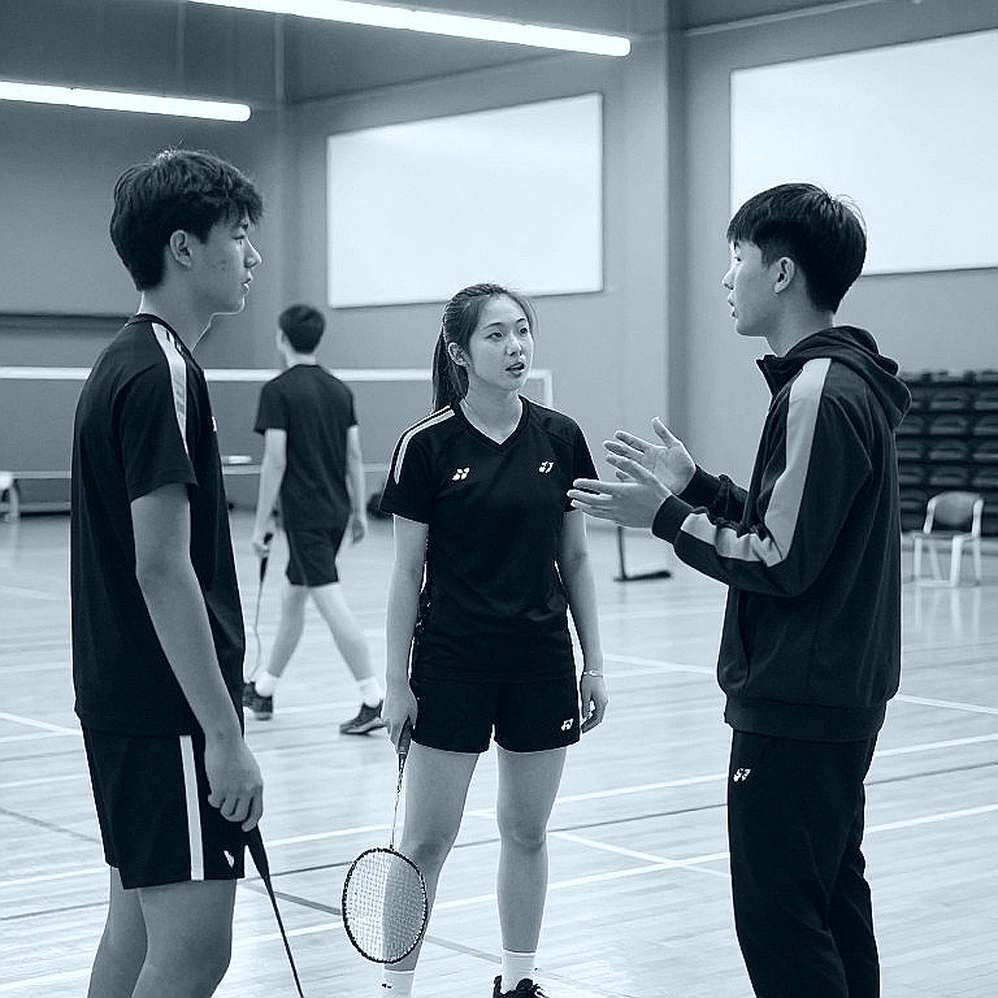
Seen through industry, the picture is clearer. Badminton's economy runs in three layers — upstream junior and grass-roots supply, midstream athletes and tournaments, downstream equipment, broadcasting and commerce. In Pakistan the upstream layer is weak or unproven; so the middle holds nothing but a single exception, and the lower market is thin. A pioneer's greatest effect is often not directly economic — it is inspiration and reputation. But turning that inspiration into an equipment market, a training market or event hosting requires exactly the pipeline that is missing.
Contrarian angle
Now take the conventional read seriously, because its emotional basis is real. Some will say — to lose like this as the leading player is a national embarrassment; it is personal failure. For an Olympian to win twenty-seven percent of points is undeniably low, and that criticism cannot simply be dismissed. But here lies the real gap: a single match can never be final proof of a system. Drawing a conclusion from one sample is statistics' biggest error. If we brand Pakistan badminton a failure from this scoreline alone, we exonerate the very system that produced the situation.
The reverse question matters more. A pioneer opens a door — but an open door and someone walking through it are not the same thing. Mahoor Shahzad's visibility has brought badminton into Pakistan's conversation, but why has that visibility not yet converted into a young generation? Often a single success masks failure rather than replacing it. A country takes pride in one player, and behind that pride the emptiness of the pipeline persists year after year. So the real worry is not the scoreline — it is the succession crisis. If she leaves the court, can Pakistan hold its place in international badminton? No one has that answer today, and that is the largest crisis of all.
Takeaway
This twenty-three-minute match left a question, not an answer. The door is open. There is only one question — who will walk through it? The answer is no longer on any court; it lies in federation policy, junior circuits, training centres and financial decisions. Three signals deserve watching. Whether a second woman on the domestic circuit consistently reaches international qualifiers — that would prove a pipeline has begun. Mahoor Shahzad's participation or retirement in the next cycle — that is the clock of the succession crisis. And whether the federation invests in a new academy or training structure. A country that protects only one player, in truth protects no player at all. Perhaps in the next cycle, when Mahoor Shahzad is no longer on court, a single scoreline will tell us — whether we kept the door open, or merely stood there.